
Introduction to Digital Printing
In today’s fast-paced business world, speed, precision, and cost-efficiency are crucial. Whether you’re running a small business, launching a product, or crafting marketing materials, you’ve likely heard of digital printing. But what exactly is it?
This beginner’s guide breaks down the fundamentals of digital printing—how it works, its benefits, how it compares to traditional methods, and why it might be the perfect solution for your next project.
What Is Digital Printing?
Digital printing refers to the process of printing digital-based images directly onto various media. Unlike traditional methods like offset printing, digital printing doesn’t require printing plates. Instead, the image is sent directly to the printer using files like PDFs or desktop publishing formats.
How Does Digital Printing Work?

At its core, digital printing uses electronic files and specialized printers to produce high-quality prints quickly and efficiently. Here’s a simplified breakdown of the digital printing process:
- File Preparation: The design or image is created and finalized using graphic design software (e.g., Adobe Illustrator, Photoshop).
- RIP (Raster Image Processing): The digital file is processed into a format the printer can understand.
- Printing: The image is printed directly onto the substrate (paper, fabric, vinyl, etc.) using inkjet or laser technology.
- Finishing: Optional steps like cutting, binding, or lamination may follow.
Types of Digital Printing
Depending on your project needs, digital printing comes in several forms:
1. Inkjet Printing
- Best for short runs and photo-quality images
- Common in homes and small offices
- Ideal for posters, labels, and canvas prints
2. Laser Printing
- Uses toner instead of ink
- Known for speed and sharp text output
- Great for brochures, flyers, and office documents
3. Digital Textile Printing
- Prints directly onto fabrics
- Popular in fashion, home décor, and custom merchandise
4. UV Digital Printing
- Uses ultraviolet light to cure ink instantly
- Excellent for printing on rigid surfaces like glass, wood, or plastic
Benefits of Digital Printing

Digital printing offers many advantages, especially for small business owners and marketers looking for agility and affordability.
Key Benefits:
- Quick Turnaround: Print on demand without setup delays.
- Cost-Effective for Small Batches: No need for bulk printing or setup plates.
- High Customization: Easily personalize each item—ideal for targeted marketing.
- Eco-Friendly Options: Less waste compared to traditional methods.
- Versatile Substrate Compatibility: Print on everything from paper to fabric, metal, and glass.
Digital Printing vs. Offset Printing
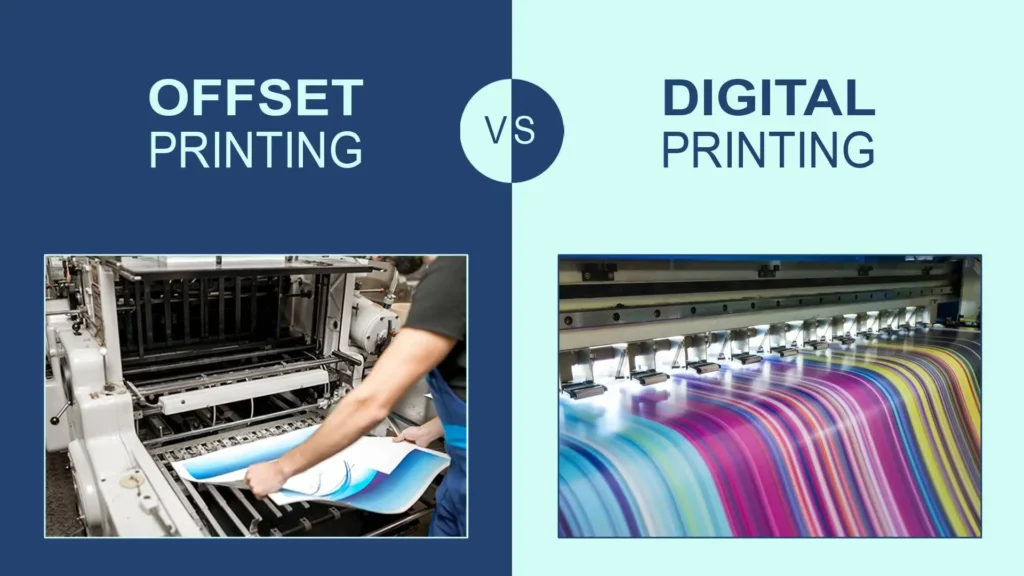
Understanding the difference between digital and offset printing helps determine which method suits your needs.
| Feature | Digital Printing | Offset Printing |
|---|---|---|
| Setup Time | Minimal | High (requires plates) |
| Cost (Short Runs) | Lower | Higher |
| Cost (Large Runs) | Higher | Lower |
| Customization | Easy | Difficult |
| Turnaround Time | Fast | Slower |
| Print Quality | Excellent (varies by printer) | Superior for very large runs |
Common Applications of Digital Printing
Digital printing is used across industries and purposes:
- Business Cards
- Brochures & Flyers
- Posters & Banners
- Labels & Stickers
- Clothing & Apparel
- Packaging Prototypes
- Custom Invitations
🔗 For marketing print design tips, see How to Design Effective Print Materials.
Best Practices for Digital Printing Projects
To get the most from your digital prints:
✅ Design in High Resolution
Ensure your files are at least 300 DPI (dots per inch) for crisp results.
✅ Use CMYK Color Mode
Digital printers operate in CMYK. Convert RGB files to CMYK to avoid color mismatches.
✅ Choose the Right Substrate
Not all printers support every material. Match your substrate to your printer’s capability.
✅ Proof Your Design
Always request a digital or physical proof before printing a large batch.
Recommended Tools and Resources
Here are some handy tools and websites to enhance your digital printing projects:
- Canva – Easy-to-use design software for beginners. https://www.canva.com
- Adobe Express – Great for quick template-based designs. https://express.adobe.com
- UniPrint– Offers professional digital printing services. https://www.uniprint.in
Is Digital Printing Right for You?
If you’re looking for flexibility, speed, and affordability for short-run or customized prints, digital printing is a smart choice. It’s especially useful for:
- Startups launching new products
- Event planners needing fast turnarounds
- Marketers targeting specific customer segments
- Creatives offering personalized merchandise
Conclusion: Take Your Printing to the Next Level
Digital printing continues to transform the way businesses create printed materials. Whether you need promotional flyers, personalized labels, or custom apparel, this modern method offers unbeatable convenience and quality.